Building a wedding gallery with emotional range
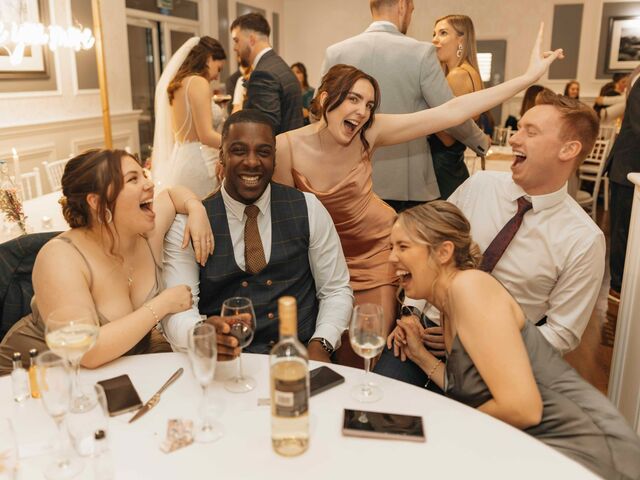
You can pick 800 frames that each pass every test you know and still hand over a gallery that feels like a catalog. That happens because judging a frame and shaping a set are different jobs, and most of us only ever do the first one. This is how to do the second: chapters, reactions, relationships, and variety you chose on purpose.
Eight hundred good photos is not a gallery
A wedding day produces somewhere in the range of 2,000 to 4,000 frames, and a typical delivery lands between 400 and 800 of them. Get to that number by judging each frame on its own merits and you will produce a set where every picture is defensible and the whole thing reads flat. Everyone has done it. The couple says thank you, they pick six for the album, and nothing in the gallery explains what the day felt like from the inside.
The reason is structural. Frame by frame selection optimizes for the average quality of individual pictures. A gallery is not experienced one picture at a time, it is experienced as a sequence, and a sequence has properties that no single frame has: pace, contrast, escalation, quiet. Judging is a filter. Shaping is composition at a larger scale, and it needs its own pass.
This is not the argument that technical quality matters less than you think. We made that argument separately in why your best photo is not your sharpest, and the short version is that focus and exposure are a floor rather than a ranking. Take the floor as given here. Assume every frame under discussion is usable. The question in this article is what you do with the several hundred usable frames that remain, which is a question about the set, not about any picture in it.
Four kinds of image in every chapter
Secure the non-negotiables first: details, getting ready, entrances, vows, the kiss, formals, portraits, speeches, dances, and an exit if there is one. Nobody is impressed by an artful gallery that is missing the ring exchange. Once coverage is safe, look inside each chapter for four different kinds of picture.
- Scene setters. The exterior, the room, the weather, the laid table, the wide view that tells a viewer where they are standing.
- Key action. The dress being fastened, the ring going on, the first dance, the toast, a parent walking in.
- Reaction. A parent crying, friends laughing at a joke you cannot hear, guests leaning forward, a child watching adults be strange.
- Detail. Hands, a place card, a texture, kicked-off shoes, the bouquet on a chair, a gesture nobody noticed.
This is not a quota. It is a check against a chapter turning into a run of portraits with no context. A ceremony needs the couple, obviously, and it also needs the person taking a breath before walking down the aisle, the view back at the room, and the family in the second row when the kiss happens.
You can only pick what you made space to shoot, which makes this a planning question as much as a selection one. Build a short coverage map from the timeline before the day. If a couple has told you the grandmother matters, that is a thread to follow from arrival to the dance floor, not a single portrait to tick off.
Work chapter by chapter, in order
A wedding has a shape that runs roughly: anticipation, preparation, arrival, commitment, release, celebration, and the quiet afterwards. Select in that order when you can. In Lightroom Classic, make a collection per chapter. In Photo Mechanic, use color classes or folders that mirror the timeline. The point is to see candidates next to their neighbors, because a transition frame looks pointless alone and obvious in sequence.
| Chapter | What the arc needs here | The frame most often missing |
|---|---|---|
| Getting ready | Anticipation, and a sense of place | The room before anyone is in it |
| Ceremony | Commitment, and the room watching it | The family reaction to the kiss, rather than the kiss |
| Formals | Everyone accounted for, nobody erased | The frame taken just after you said thank you |
| Couple portraits | Two people alone, breathing | A wide that shows where they actually were |
| Speeches | Both ends of the joke | The person being spoken about, not the speaker |
| Dancing | Energy, motion, noise | Somebody at the edge catching their breath |
| End of night | Departure and aftermath | The empty room once it is over |
Do not force chronological perfection. A detail shot from the morning can sit beside a later portrait if the rhythm calls for it. But keep chronology as the default, because a gallery that follows the day reads as a day, and a gallery sorted by quality reads as a portfolio.
Look for evidence of relationships
The pictures couples come back to years later are frequently not the milestones. They are the evidence: a friend fixing a veil, two siblings sharing a private joke during a speech, a grandfather holding the program with both hands, a child asleep under a table, an aunt straightening a place card before the doors open. Milestones tell you what happened. Relationship frames tell you why it mattered.
So while you are selecting, ask who is in each chapter. If you have six strong frames of the couple during the speeches and not one reaction from either family, the chapter is incomplete even though every frame in it is good. If you photographed a large group of friends all day and delivered one generic dance floor picture of them, the gallery is thinner than the day was.
Run a people check near the end of the process. Write down the couple's named priorities, immediate family, the wedding party, and anyone culturally central to the ceremony, then confirm each one appears somewhere as a person rather than only as a row in a formal group. You do not owe a portrait of every guest. You do owe the couple a gallery that has not quietly left out someone who mattered.
Variety is structural, not decorative
A set needs change in four dimensions: distance, orientation, pace and mood. After a strong portrait, find the wide frame that explains where it happened, and the close one that shows a hand or an expression. After a loud dance frame, use a quiet one. After bright afternoon light, let a dark reception frame signal that time has passed. Viewers register these shifts without naming them, and a set that never shifts reads as monotonous however good the individual pictures are.
The quickest diagnostic is a grid review of your picks at thumbnail size. Ten medium-distance frames of the couple in a row will jump out immediately in a way they never do when you are working one image at a time. Same for a gallery that is entirely horizontal, or entirely one focal length. That is also where genuine repetition surfaces, which is worth catching before it becomes an over-delivery habit of the kind we describe in why you should stop over-delivering photos.
One trap: a wide crop and a tight crop of the same exposure are not two pictures. They are one picture, delivered twice, and clients feel the padding even when they cannot articulate it. Pick the stronger crop and go find a genuinely different moment. How many frames should end up in the set at all is a related question, answered in how many wedding photos to deliver, and the ratio between what you shot and what you send is in the wedding shot to delivered ratio.
Leave room for the imperfect but true
Documentary frames come with mess. A guest's shoulder in the corner, mixed light across the reception, a subject half hidden behind somebody's head, an unplanned gesture. If a frame carries a real emotional beat, it can sit beside your polished portraits, and the contrast is often what makes the polished ones land.
Use them sparingly and deliberately. One frame of a parent crying behind a row of guests makes a ceremony feel intimate. Fifteen loose crowd shots make the gallery look careless, and the couple will read the difference as effort rather than intent. If you are trying to decide whether a specific soft or messy frame has earned its place, the practical test is in when a soft photo is worth saving.
Two cautions. First, imperfection is not a substitute for coverage: a gallery of nothing but candid mess is as unbalanced as a gallery of nothing but formals. Second, judgment about people still applies. Include the unguarded laugh and the tears. Think twice about the frame that is honest and unkind, because the person in it will see it, and a gallery is not a photo essay you own.
The pass where the gallery gets built
The practical workflow has three stages and only the last one is about the set. The first gathers candidates fast, with no zooming and no comparing. The second resolves bursts and technical alternatives, choosing the strongest expression and then checking focus among the last two or three. Both of those are judgments about frames, and the way to get through them without picking the whole wedding twice is in rejecting photos without second-guessing.
The third stage lays the picks out by chapter and asks five questions:
- Can a viewer tell where the day happened and how it changed over the hours?
- Is every major event covered from both the action side and the reaction side?
- Do the important relationships appear naturally, not only in the formal groupings?
- Does each frame add a new moment, feeling, or point of view?
- Is there quiet space between the obvious hero images?
Doing this last is what prevents the most common failure, which is choosing all your favorites first and discovering there is no connective tissue between them. Note that the album is a different edit again, usually tighter and more strictly chronological, with different rules about repetition. We compare the two in album versus gallery selection.
Where Kepla fits, honestly
We are building a picking app, so read this knowing that. It is being built for iPhone, iPad and Mac, and it has not shipped. The booking page is live and free today while we build the rest.
The split above is the reason it exists. Kepla checks every frame against clear criteria, sharp focus, open eyes, expression and near-identical frames, then hands you a shortlist. From a 2,000 photo wedding that is roughly 800 picks, in minutes. That is the first stage, the mechanical one, and it is the stage that eats the evening you needed for the third.
It never deletes, moves or renames a single file. It marks which photos it picked, every original stays where you put it, and anything not picked is one tap away. That matters more for this article than for most, because the frames a model ranks lowest are exactly the ones a story gallery needs: the reaction at the back of the room, the hands, the frame where nobody is looking at the camera.
The mechanical pass runs on your phone on the drive home. The shaping pass belongs on a Mac, in a grid, with a fresh head, and the same shoot opens there with nothing redone. What we will not claim is that software can build the arc. It cannot see that the woman in the third row is the bride's mother, and it never will.
FAQ
What does emotional range in a wedding gallery mean?
It means the set moves between different feelings and registers rather than repeating one. Anticipation, tenderness, ceremony, laughter, noise, exhaustion, quiet. In practice you get it by selecting scene setters, action, reactions and details within each chapter of the day, instead of picking whichever individual frames scored highest on technique.
How many reaction photos should a wedding gallery include?
There is no correct number, but every major chapter should contain some. Getting ready, ceremony, speeches and dancing all have an audience, and the audience is usually where the emotion is legible. Select enough that the people who mattered are present in the gallery, and few enough that you are not delivering four versions of the same laugh.
How do I stop a wedding gallery from feeling repetitive?
Review your picks as a grid of thumbnails rather than one at a time. Repetition is almost invisible frame by frame and obvious at that scale. Look for runs of the same distance, the same orientation, or the same two people in the same light, then replace some of them with a reaction, a wide, or a detail from the same chapter.
Should a wedding gallery be delivered in chronological order?
Chronological is the right default, because it lets the gallery read as a day rather than a portfolio. Small departures are fine when they serve the rhythm, such as placing a morning detail beside a later portrait. Large departures tend to confuse people who were there and remember the order it happened in.
How many photos should a wedding gallery have?
Typical deliveries fall between 400 and 800 images from a full day, though the right number depends on coverage hours and what you promised. The more useful question is whether every frame earns its place. A tighter set with real variety almost always reads as more generous than a larger one full of near-identical alternates.
Can AI culling software select for story?
Not really. Current tools score things they can measure: focus, open eyes, exposure, near-identical frames. Those are useful for the first pass and genuinely fast. They cannot tell that one frame is the only time all day a father looked at his daughter that way, so the shaping pass stays yours.
Spend your evening on the gallery, not the sorting.
Kepla for Mac clears the obvious misses from a card, names the reason on every frame it sets aside, and leaves the choosing to you. Nothing is ever deleted, moved or renamed. Free through the private preview · the first hundred photographers keep it at $99 a year.