Why your best photo isn't the sharpest one
Every photographer has delivered a gallery where the client's favorite was the frame they almost cut. Slightly soft, a little noisy, someone half out of the edge, and the only real moment of the day. This is an argument for treating technical quality as a floor rather than a ranking, and a practical way to pick that respects the difference.
The one they printed
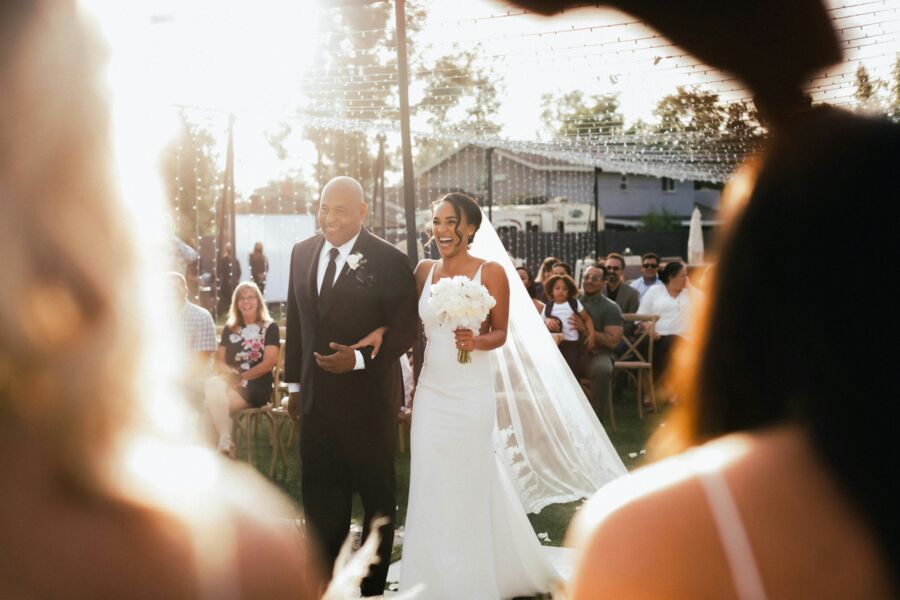
Every photographer has a version of this story. You deliver a gallery, and the frame the family prints is the one you nearly left out. The father of the bride is a touch soft because he moved and the light was gone. There is grain, because it was eleven at night. Someone's shoulder is clipped at the left edge. And his face is doing something that did not happen again all day.
You almost lost it because at 100 percent it looked like a failure. The client never opened it at 100 percent. They opened it on a phone, three inches wide, and stopped scrolling.
This is not an argument for lower standards. It is an argument for putting them in the right order. Technical quality is a floor, not a ranking. Sharpness tells you a photo is usable. It does not tell you it is good. Most of us only answer the first question, because it is easier and because it can still be answered at one in the morning.
Why sharpness gets more votes than it deserves
Sharpness has one enormous advantage over every other quality in a photograph. You can verify it. Zoom in, look at the eyelashes, get a yes or a no. It needs no taste, and it produces an answer you could defend to another photographer. Nothing else in the frame behaves like that. Whether a gesture is beautiful is a judgment you make with your own nervous system, and late at night that system is not at its best.
So measurable things quietly outrank felt things. That is not stupidity, it is self-protection. A soft photo feels like a mistake someone could point at. A sharp, empty photo feels like nothing, and nobody complains about it.
Our tools lean the same way, for an honest reason: focus is what software can score. Every app in the category leads with focus detection, eye detection and blur scores, because those are what a model measures reliably. The scores are useful. The mistake is reading a list sorted by sharpness as a list sorted by quality. We went into what these models can and cannot see in whether you can trust AI to pick your photos.
Then there is the clock. A UK survey of 300 plus wedding photographers put culling at about 11 percent of working time, against 55 percent for editing and 4 percent for shooting, reported by PetaPixel from a 2020 survey, before AI tools were common. Eleven percent sounds small until you notice where it sits: at the end, when the only test you can still run reliably is the one at 100 percent zoom.
What actually makes a frame the one
If sharpness is the floor, what is the ranking? Six things, and not one of them can be measured.
Timing
A laugh has a shape. It builds, it peaks, it collapses into something softer and usually better. Three frames from that half second can be technically identical and only one is the photograph. This is the most common reason the sharpest file loses.
Expression, not smile
A smile is a pose. An expression is what a face does when nobody is managing it. The best frame in a set of formals is often the one taken after you said thank you, when everyone relaxed and the groom's mother looked at her son instead of the lens.
Gesture
Hands carry more than faces do and get watched less. A hand on a back, a hand gripping a bouquet too hard, a father's hand hovering an inch from his daughter's shoulder without landing. When two frames look the same, look at the hands.
The space between people
Distance is content. Two people leaning in and two standing politely apart are different photographs even when exposure, focus and smiles match. Once you read the gap, a lot of near-duplicates stop being near-duplicates.
The edge of the frame
Photographers cull from the center out. Clients look at everyone in the picture, including the aunt at the back doing something extraordinary. Some of the best frames in a gallery are technically about the couple and emotionally about a guest at the far right.
Rhythm across the gallery
A gallery is a sequence, not a pile. It needs wide and tight, loud and quiet, faces and hands and the empty room before the guests arrived. Perfect portraits with no breathing room read as flat however good each one is alone, which is why how many photos to deliver is really a question about variety.
Where soft is fine, and where it truly is not
None of this means softness is free. It means the cost changes completely depending on what the frame is for. Here is the honest split.
| The frame | Soft acceptable? | Why |
|---|---|---|
| Dance floor, motion in the limbs | Yes, often better | Blur reads as movement. A frozen dance floor looks like people standing still with their arms up. |
| Long lens through a crowd | Yes | You are shooting through heads and shoulders. The reaction is the point, not the rendering. |
| End of the night, high ISO, grain | Yes | Grain is texture. It reads as time of night, and as what the room felt like. |
| Film, or a lens that is soft on purpose | Yes | It is a style the client chose when they booked you. |
| Rings, shoes, dress, stationery | No | These are product shots. Description is the only job, so there is nothing to fall back on. |
| Group formals, and faces at a distance | No | Someone will order a print, and small faces are where softness shows first. |
The principle underneath the table: softness is acceptable when the frame has something else to say, and unacceptable when description is the whole job. A blurred hand on a dance floor is doing work. A blurred ring is just blurred.
It is worth saying out loud that nobody views a wedding gallery at 100 percent on a 27 inch display. Except you, on the night you pick. Clients see it at phone width, then a laptop, then maybe an album spread or a print. Only that last one raises the bar back up, and only for a handful of frames. What happens to the rest is covered in what to do with the photos you do not pick.
The test that settles arguments
Take the frame you are unsure about and the tack sharp version of the same moment. Print both at the size a client would order and live with them for a week. You will stop caring which won the 100 percent test, and you will learn your own print threshold.
Two passes: mechanics first, then meaning
The fix is to stop doing one pass and start doing two, because filtering and ranking are different jobs, and doing them at once is why picking takes all night.
Pass one, mechanics
One question: is this frame usable? Eyes shut on the only subject. Focus on the wall behind them. Blown past recovery. Somebody walked through the shot. This is a yes or no test against a fixed bar. It does not require you to hold two photographs in your head at once, which is why it is fast and why it survives being done tired.
The rule for pass one is cut what is unusable, not what is imperfect. If you catch yourself thinking "this is a bit soft but," keep it. The "but" is pass two's business.
Pass two, meaning
Now rank what survived by what it says: timing, expression, gesture, the gap between people, the edges, and how a frame sits beside its neighbors. This is the expensive pass. It needs a fresh head, so it belongs early in a session.
There is good reason to think ranking is genuinely harder than filtering, not just slower. Sheena Iyengar and Mark Lepper's 2000 jam study in the Journal of Personality and Social Psychology found that more options led to less buying and less satisfaction, and Barry Schwartz built The Paradox of Choice around the same idea: people who hunt for the best option rather than a good enough one end up with more regret. A wedding hands you 2,000 to 4,000 frames and asks you to find the best in every cluster. Research also suggests repeated decisions degrade the quality of later ones, though parts of that literature are debated, so treat it as a reason to schedule the hard pass first. We took the argument apart in why picking photos is so hard.
Two things make it easier. Compare within a group instead of judging a frame alone, because eyes are far better at telling two things apart than at scoring one thing in isolation. And decide the shape of the gallery before you start, so you choose against a brief rather than against infinity.
This split is also the clearest case for letting software do the first pass. A model is good at the floor test and bad at meaning. It sees closed eyes and missed focus. It cannot see that this is the only frame all day where the groom's brother looked like that. Let it clear the floor, then spend judgment where judgment is needed. Most of the errors in photo culling mistakes come from mixing the passes together.
What to say when a client asks why a photo is soft
It comes up perhaps twice a year, from the client who zoomed in. Two things make it a non-event: answer plainly, offer an alternative.
Something like this works. "That one is a little soft. He moved, the light was almost gone, and I kept it because his face in that frame is the best of the whole night. If you want it large I would print this other one, which is sharper."
What does not work is apologizing into a problem that was not there. "I am so sorry about the quality" tells a client who liked the picture that they were wrong to, and sends them back through the gallery with new eyes. You made a choice. Say so.
Most of this is handled before the wedding. Tell couples at booking that the end of the night looks different from the ceremony, grainier, more movement, more like being there, and a soft dance floor frame arrives as a style they expected rather than a defect they found.
The exception is when they are right. If a group formal is soft or the ring shot missed, that is not a style choice, it is a miss. Own it in one sentence, offer your best alternative, and fix it if it is fixable. Photographers lose trust by defending mistakes, not by making one.
Where Kepla fits, honestly
We are building a picking app, so read this knowing that. It is being built for iPhone, iPad and Mac, and it has not shipped. The booking page is live and free today while we build the rest.
The design follows the two passes. Kepla runs the mechanics pass: it checks every frame for focus, open eyes, expression and near-identical duplicates, then hands you a shortlist. From a 2,000 photo wedding that is roughly 800 picks, in minutes.
It never deletes, moves or renames a single file. It marks which photos it picked, and every original stays exactly where you put it. That matters most for the frame this article is about. The almost-cut photograph, the soft one with the real moment in it, is always one tap away, because the thing a model judges worst is the thing you cannot get back.
Then the meaning pass happens where it should. The mechanics pass runs on your phone on the drive home, and the same shoot opens on the Mac when you want two frames side by side at full size. Nothing is redone, and the second pass gets your attention while you still have some. The case for that split is in phone versus computer culling.
What we will not claim is that software can do pass two. It cannot. It can only make sure you arrive there with a fresh head and every frame still in front of you.
FAQ
Should I cut every photo that is not tack sharp?
No. Cut what is unusable, not what is imperfect. A frame is unusable when focus landed somewhere other than the subject, when the only subject has their eyes shut, or when nothing readable is happening. Slight softness with a real moment in it is not the same thing, and it is frequently the frame a client chooses to print.
How sharp does a photo need to be to print?
It depends on print size and viewing distance rather than on any single number. A frame that looks soft at 100 percent on a monitor can look perfect as an 8 by 10, and fall apart at 24 inches wide. The only reliable way to learn your own threshold is to print two versions of the same moment at the size your clients actually order.
Why do clients pick photos that photographers would reject?
Because they are reading different things. You are checking focus, exposure and whether the frame is technically clean. They are looking for the person they love doing something recognizable. Expression, timing and gesture win that comparison almost every time, and none of those qualities show up in a sharpness score.
What do I say when a client asks why a photo looks soft?
Say plainly that you made a choice: the subject moved, the light was gone, and the moment was worth more than the shutter speed. Then offer an alternative. Give them a sharper frame of the same moment, or a print size where the softness will not show. Avoid apologizing for a picture they told you they liked.
Can AI culling tell a good photo from a sharp one?
Not really, and no vendor should claim otherwise. Models are reliable at mechanics: focus, closed eyes, blown highlights, near-identical frames. They cannot tell that one frame is the only time all day someone looked at their father like that. Use them to clear the floor, then rank what is left yourself.
What is a two-pass culling workflow?
Pass one is mechanics. One question, is this frame usable, answered fast against a fixed bar. Pass two is meaning. Rank the survivors by timing, expression, gesture and how they sit next to each other in the gallery. Keeping the passes separate is faster than one long pass, because filtering and ranking use different kinds of attention.
Keep the frame you almost cut.
Kepla for Mac clears the obvious misses from a card, names the reason on every frame it sets aside, and leaves the choosing to you. Nothing is ever deleted, moved or renamed. Free through the private preview · the first hundred photographers keep it at $99 a year.