How to cull a bird burst: eye, wing, behavior
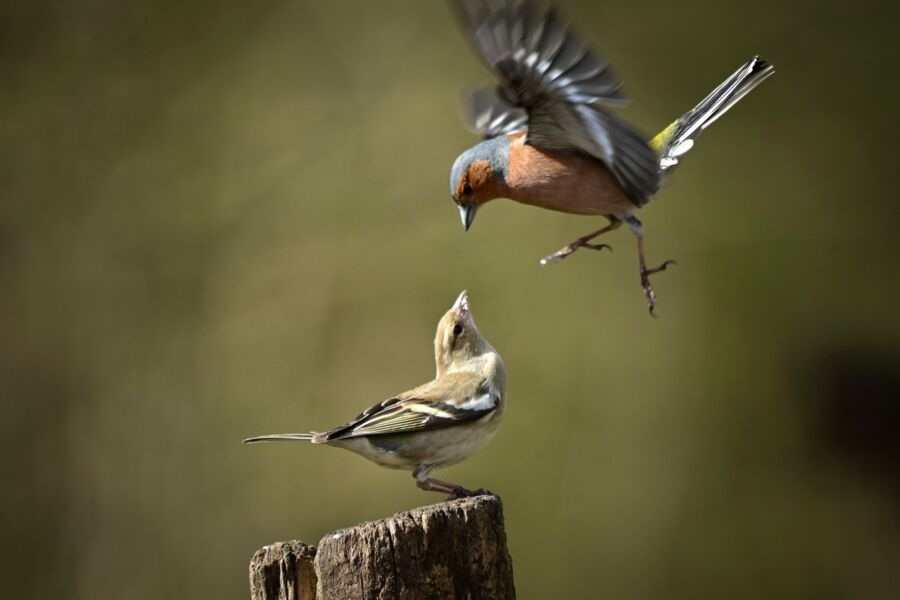
A bird in flight burst can hold forty frames that all look promising at thumbnail size. Full screen, the differences turn maddening: one has the eye sharp and a clipped wing, one has beautiful wings and a head turned away, one shows the behavior through a shower of branches. Here is the order to judge them in, and why the order is the whole job.
A bird burst is not a duplicate problem
Nine frames of a groom laughing is a duplicate problem. The subject is roughly the same shape in all of them, and you are picking the best version of one moment. Nine frames of a heron leaving the water is something else entirely. Between one file and the next, the animal changes shape. Head angle, wing geometry, tail spread, feet, prey, droplets and the gap between bird and background are all different, and at twenty or thirty or a hundred and twenty frames a second, the moment you were shooting for may live in one file.
That makes wildlife bursts harder in a specific way. With people, the frames are alternatives. With birds, the frames are a sequence, and the best picture and the most informative picture are frequently not the same file.
Autofocus makes it harder again. A subject detection mode will hold a bird's head for four frames and then slide onto a wing tip, a reed, or the far bank. A frame that reads as crisp in a thumbnail can be soft on the eye at 100 percent, so thumbnails cannot be trusted. But inspecting all forty frames at 100 percent before you narrow anything costs you the evening.
The general decision ladder for burst selection, the one that applies to weddings and portraits, is in how to choose the best frame from a burst. Everything below is the wildlife variant, where the subject moves, the light is worse, and a technically inferior frame can legitimately win.
Three gates, and the order matters more than the criteria
Judge in the order of what cannot be fixed and what cannot be repeated. Focus cannot be fixed. A wing position cannot be repeated. A behavior may never happen in front of you again. So the gates run in that order, with one wildlife specific override at the end.
| Gate | Where you look | What fails the frame | Fixable later? |
|---|---|---|---|
| 1. Eye and head | The nearest eye, magnified. Not the wing, not the breast, not the branch. | The eye or head plane is soft while another frame in the run has it clean. | No |
| 2. Wing and body | The whole silhouette at fit to screen size. | Wings caught in an ungainly transition, a wing cutting through the head, the bird reading as broken rather than flying. | No |
| 3. Behavior | What the picture is telling you. | Nothing is happening, or what is happening is unreadable. | No |
| Then: framing, background, exposure | Edges and tone. | Almost nothing on its own. | Usually yes |
Climb the ladder until one frame is left standing. Most of the time you never reach the bottom row, which is the point: exposure and noise are the easiest things to see and the least useful things to judge, so they get looked at last or not at all.
The override: a frame that fails gate one can still be the file you keep, if it is the clearest evidence you have of something rare. That does not happen at a wedding. It happens constantly in wildlife, and it is the reason the ladder needs a second track. More on that in gate three.
The eye, and only the eye
Zoom to the nearest eye. Not to the middle of the frame, not to the wing that caught the light. This is the single most common mistake in wildlife burst selection and it is an easy one to make, because a sharp wing tip is far more visible at a glance than a soft eye.
There is a physical reason it happens so often. A long lens at close range has almost no depth of field, and the leading wing of a bird flying toward you can sit several inches in front of its head. Autofocus that grabbed the wing produces a frame that looks spectacularly sharp everywhere except the one place that matters. Two frames later the focus has snapped back to the head and the wings are slightly soft, and that is usually the better file.
When the eye is not visible, because the bird is side on, backlit or flying away, judge the head plane and the leading edge of the body instead. Ask whether the head is resolved, not whether the picture is sharp.
A catchlight is a bonus, not a requirement. Overcast light and deep shade produce plenty of good frames without one, and hunting for a sparkle can push you toward a worse pose. Look for a head that reads as alert and intentional rather than mid blink.
One caution about hierarchy. Sharpness is a floor to clear, not a score to maximize, a point we made at length in why your best photo is not your sharpest one. Gate one asks whether the eye is acceptable, not which frame is sharpest by a hair.
Wing position, and the myth of the correct wing
Once focus is acceptable in more than one frame, stop zooming and compare gesture at fit to screen size. This is a shape judgment and it does not survive being made at 100 percent.
There is no universally correct wing position. A full downstroke reads as power, which suits an osprey carrying a fish. A fully raised wing shows feather structure and works for a heron settling. A level glide emphasizes the environment and lets a wide frame breathe. The wrong wing position is the one caught mid transition, where the wing is neither up nor down and the bird looks dislocated rather than airborne.
Watch for these, in roughly this order of damage:
- A wing crossing the head or bill, which turns a bird into a puzzle.
- A wing tip clipped by the frame edge when the rest of the bird has room to spare.
- Feet dangling aimlessly, when two frames later they are tucked or extended toward prey.
- The tail folded flat during a turn where it should be fanned.
Do not reject a frame because the wings are asymmetrical. Real flight is asymmetrical almost all the time, and a perfectly matched pair of wings often reads as a specimen rather than an animal. What you are asking is whether the shape describes flight clearly for that species and that direction of travel.
Resist the urge to crop while you compare. Give a bird room in the direction it is going, decide the frame after you have chosen it, and never crop tighter just to make the eye look bigger. Crops belong after selection, not during.
Behavior, and when rarity beats sharpness
Now ask what the picture is actually about. Is the fish visible? Is the second bird in the frame? Can you see the handoff, the strike, the display, the moment the talons open?
A useful test is the one second read. At normal viewing size, not zoomed, can someone tell what the bird is and what it is doing? A clinically detailed crop of a perched bird often fails that test. A slightly noisy frame of an owl standing over prey passes it instantly. When two frames are close on gates one and two, the one that reads faster wins.
This is also where the override lives. Run two tracks, and label them differently:
Portfolio frames have to clear all three gates. Clean eye, convincing gesture, background that does not fight the subject. Be strict, because this set is what represents you.
Documentation frames only have to be legible. A branch across the tail, high ISO, a hard crop: none of it disqualifies a file that is the only record you have of a prey exchange, a molt stage or an interaction between an adult and a juvenile. Judge it on what it proves.
Keeping these two tracks separate solves an emotional problem as much as a filing one. If every rare moment has to be an artistic keeper, you either crowd your best gallery with weak pictures or you throw away the record. Neither is necessary. Setting up categories like this before you start is the argument in building your own culling criteria.
How many to keep, and when to stop looking
For an ordinary flyby, one frame. Perhaps two if the second is a genuinely different pose rather than the same pose a fraction later.
For a real progression, keep a short sequence: approach, contact, resolution. Three files that tell a story are worth more than the single peak frame on its own, and far more than twelve near copies of the peak. The test for every additional frame is whether it adds information. Not whether it is nearly as good. Nearly as good is exactly the file you will never use.
The mistakes that cost the most time, in one place:
- Judging frames one at a time. Get the run down to six or so, then put them side by side. Memory is terrible at comparing near identical shapes; your eyes are excellent at it.
- Checking wings before eyes. A sharp wing cannot rescue a soft head in a close flight frame, so you have spent the attention backwards.
- Keeping six just in case. The just in case files never get used, and they make next year's search worse.
- Discarding rare behavior for bad light. Label it as documentation and decide about publishing later.
- Forgetting the approach and the aftermath. The frame before the strike is often the one that explains it.
When a run is genuinely tied after all three gates, it is tied. Take either one and move on, because the next burst is waiting and the difference is invisible to everyone but you. Speed on the whole trip comes from not relitigating ties, a point we made about culling at very high frame rates.
What software can and cannot judge here
Use software for the part that is mechanical. Grouping a run into one stack, surfacing the technically clean frames, and getting the accidents out of the way is repetitive work and a computer is better at it than you are at 11 PM. Lightroom Classic's compare and survey views handle the side by side stage, and flags, stars and color labels can hold your portfolio and documentation tracks apart.
Be clear about what the automation is not doing. It does not know which wing position suits a hunting sequence. It does not know that a molt stage is unusual for the date, or that the second bird in the frame is a juvenile. It tends to reward visible eyes and broad sharpness, which means it will under rank a dramatic silhouette, a deliberate panning blur, or a subject partly screened by habitat. Those are three of the best pictures most wildlife photographers take in a year.
Adobe's Assisted Culling in Lightroom now scores subject focus, eye focus and eyes open, and Adobe describes it as optimized for portraits and headshots. That is useful context rather than a criticism: it is doing what it says on the label, and a folder of terns is not what it was tuned for. We look at that in the limits of Lightroom Assisted Culling, and at the wider pattern in what AI culling misses.
Our own position, honestly stated. Kepla's picking app is still being built, native for iPhone, iPad and Mac. It proposes a shortlist and hands the judgment back to you, and it never deletes, moves or renames anything, so every frame it did not pick is still sitting there when you disagree with it. For wildlife that promise matters more than it does anywhere else, because the file worth keeping is often the one an algorithm scored lowest. Getting the whole trip organized around that first pass is covered in our wildlife trip culling workflow. The booking page is live and free today.
FAQ
How many photos should I keep from one bird in flight burst?
For a routine flyby, one strong frame, plus one alternate only if the pose is genuinely different rather than a fraction later in the same wingbeat. Keep more when the run documents a real progression such as a takeoff, a strike or a food exchange, where the approach and the aftermath explain the peak frame.
Does the eye always have to be sharp in a bird photo?
For close portraits and most flight frames, yes, it is the first gate. The exceptions are real though: silhouettes, deliberate panning blur, distant environmental scenes where the bird is small in the frame, and documentation shots where what the bird is doing matters more than fine feather detail.
Which wing position is best for a bird in flight?
There is no single correct one. A full downstroke reads as power, a raised wing shows feather structure, a level glide suits a wide environmental frame. The position to avoid is the mid transition shape where the bird looks dislocated, and any frame where a wing crosses the head. Asymmetry is normal and is not a fault.
Can AI pick the best frame from a wildlife burst?
It can group the run, flag the clearly failed frames and point at the technically clean ones, which saves real time. It cannot judge wing gesture, species specific behavior or how rare a moment is, and most tools were tuned on people rather than animals. Let it narrow the pile, then choose the winner yourself.
Should I cull bursts zoomed in or zoomed out?
Both, in that order. Zoom to the nearest eye to settle focus, because that is the one thing a slider cannot fix. Then zoom back out to fit the screen to compare wing shape and behavior, because gesture is a whole silhouette judgment and it disappears when you are looking at feathers at 100 percent.
What do I do with a rare behavior shot that is technically poor?
Keep it, and label it as documentation rather than portfolio. A noisy, hard cropped frame can be the only record you have of a feeding method, a molt stage or an interaction. Keeping the two categories apart means the record survives without weakening the gallery you show people.
Let the first pass run itself.
Kepla for Mac clears the obvious misses from a card, names the reason on every frame it sets aside, and leaves the choosing to you. Nothing is ever deleted, moved or renamed. Free through the private preview · the first hundred photographers keep it at $99 a year.