Three thousand decisions a wedding, and how to cut them
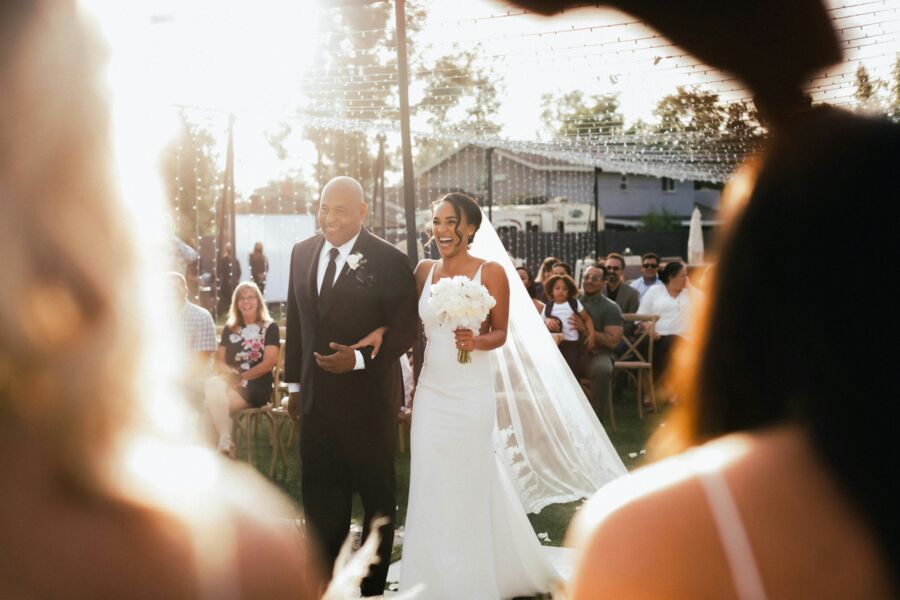
A wedding sits somewhere in a 2,000 to 4,000 frame range, so call it 3,000 frames and one look each. That is the floor of the work, not the total. This piece is about the count itself: where the decisions come from, how to count your own, and the structural changes that make the number smaller rather than the evening longer.
Where three thousand comes from
A wedding day typically produces 2,000 to 4,000 RAW frames, and a delivered gallery is typically 400 to 800 images. Take the middle of that first range and you have 3,000 frames, each of which needs at least one look before it can be picked or passed over.
One look per frame is the floor. It is not the number, because a frame rarely gets asked only one question. A twelve frame recessional burst is not twelve verdicts, it is a comparison: this expression against that one, this hand position against that one, and then a judgment about whether the whole group earns a place at all. Scenes get reopened. Frames get revisited when the standard drifts. Every extra question you ask while the folder is open, black and white candidate, album contender, social crop, retouch flag, is another pass over the same three thousand things.
So the frame count is the input. The decision count is what you actually spend, and it is the number worth managing, because it is the one you can change without working faster or caring less.
What this article is not about
How long a session should run, how bright the room should be and what time of day to start are a different problem, and we covered it in why culling is exhausting. Why your own photos stop looking good to you somewhere around hour five is covered in the emotional toll of culling. This one is arithmetic: how many times you have to decide, and how to make that number smaller.
Count your own, once, on one wedding
You do not need a study for this. You need one wedding and two tallies. Note the number of frames you imported, and the number of moments the day breaks into: prep, first look, the ceremony in a few segments, formals, portraits, speeches, first dance, party, exit. Most photographers land somewhere between thirty and sixty moments without trying.
Now count the questions each pass asks. A technical pass asks one question per frame. A scene pass does not ask a question per frame, it makes comparisons, and picking one winner from a group of eleven takes ten comparisons at minimum. Summed across the day, that is roughly one comparison for every frame that is not a winner. A story pass asks one question per moment.
| Pass | The question | How often you ask it | 3,000 frames, 40 moments |
|---|---|---|---|
| Technical | Is there an obvious reason this cannot be delivered | Once per frame | 3,000 |
| Scene | Which of these near identical frames is strongest | Once per frame that is not a winner | about 2,960 |
| Story | Does this moment belong, and what is missing | Once per moment | 40 |
| Floor | about 6,000 |
That is a floor for a workflow that is already tidy. It assumes you never reopen a scene, never re-rate a frame, and never ask a second question while the first is still open. Nobody works like that on a Tuesday. The real number on a messy night is higher, and every habit below is aimed at one of the three rows rather than at your stamina.
The useful thing about having the number is that it changes what counts as a good idea. A trick that makes each decision two seconds faster saves you a couple of hours. A change that retires an entire column saves you thousands of decisions.
The cheapest decision is the frame you never took
Every decision in that table started as a shutter press. Frames are close to free on the day and expensive on the Tuesday after, which is why the count creeps up year after year without anyone deciding to let it.
The usual sources are familiar. The safety burst on a moment you already had. Holding the shutter two seconds past the end of the aisle walk. A camera capable of twenty frames a second pointed at a static group. A second shooter with no brief on volume. None of these feel like a decision at the time, and all of them are a decision you will make later, when you are tired.
This is not an argument for thinner coverage. Nobody should miss a moment to save themselves an evening. It is an argument for shorter bursts on moments that are already solved, and for knowing your own ratio. If you deliver 600 frames from 3,000 you are keeping one in five, and every extra 500 frames you bring home is 500 more floor decisions for the same gallery. The shot to delivered ratio is the fastest way to see where you actually sit, and your keep rate is the number to watch across a season rather than across one job.
Ask one question per pass, and write it down
The most expensive folder is the one you open without knowing what you are looking for. If your standard lives in your head, every frame is a fresh judgment, and a fresh judgment costs several times what a check costs.
Write the criteria down before you open the folder. Three or four plain lines is enough: what makes a frame unusable, what makes a moment essential, how many frames a moment gets. Then a decision stops being an opinion you have to summon and becomes a comparison against something fixed. Building your own culling criteria walks through what to write, and the writing is a one time cost that pays back on every job after it.
Then hold one question per pass. Technical first, and only technical: is there an obvious reason this frame cannot be delivered. Not whether it is good. Not whether it beats the frame before. Not whether it would work in black and white. Every extra question you allow into that pass multiplies the biggest column in the table, and the questions you defer almost always turn out to be cheaper later, because by then you are asking them of a few hundred frames instead of a few thousand.
Decide once per moment, not once per frame
People are much better at comparing two things than at judging one thing against an idea of what good looks like. Choosing the strongest of eleven frames is one decision made with the answer in front of you. Asking eleven separate times whether a photo is good enough is eleven decisions made against a standard that moves as the night goes on.
So work in groups. Pull up the burst, pick the winner, allow one alternate at most, and close the moment. Choosing the best frame from a burst is a smaller and cleaner question than asking whether any single frame deserves to exist, and it is the same question every time, which is what makes it fast.
Closing has to mean closed. The frames you did not pick are still sitting in the folder, untouched, and they will still be there next week if a client asks for something specific. Reopening a moment you already settled is the most common way a 6,000 decision evening turns into a 9,000 decision evening, and it never comes from new information. It comes from doubt.
Standing rules retire whole categories of decision
A rule you make once retires a decision you would otherwise make thousands of times. That is the entire mechanism, and it is why written standards beat willpower.
| Standing rule | What it retires |
|---|---|
| One winner and one alternate per moment, then the moment is closed | Every argument about whether to keep a third and a fourth |
| No frame gets a second look until the pass is finished | Re-deciding frames you already settled |
| Blinks, misfires and test frames go in the first pass with no zooming | Hundreds of inspections at 100 percent |
| The delivered count is the number written in the contract | The open ended question of whether the gallery is big enough |
| Black and white, album and social choices happen after the gallery is picked | Three extra questions on every frame in the technical pass |
| The ceremony never runs in the last block of a session | Cheap calls on the frames that matter most |
Keep the rating system as small as the rules. One key for a clear reject, one for a candidate, one for a final pick is enough to run a wedding. A seven color label system looks organized in April and is a memory test in October, when you cannot recall whether yellow meant album candidate or needs retouching. If you need more detail than that, add it in collections after the selection is finished, when the pool is a few hundred frames rather than a few thousand.
Hand off the questions that do not need you
Look at the table again. The technical row is the biggest column by a wide margin and the least interesting work in the business. It is a rules check. It needs no taste, no memory of the day, and no relationship with the couple, which is exactly why it is the row worth moving off your desk.
There are three honest ways to do that. An assistant or an outsourced editor can run it if your standard is written down, which is another reason to write it down. Adobe now ships Assisted Culling in Lightroom Classic and cloud Lightroom, labeled early access, scoring subject focus, eye focus and eyes open, and Adobe states it is optimized for portraits and headshots. A dedicated selection tool will propose a set for you to review. All three change the same thing: you stop making thousands of decisions and start checking a proposal.
Be honest with yourself about what that leaves. Reviewing someone else's judgment is still a decision, so expect the count to fall rather than vanish, and expect the story pass to stay entirely yours. Nothing on this list has an opinion about whether the grandmother laughing at the back of the room belongs in the gallery.
That is the gap Kepla is being built for. The app that picks your best shots on iPhone, iPad and Mac is still in development, so we are not going to pretend you can run tonight's wedding through it. When it ships it will mark which photos it picked and never delete, move or rename a single file, so anything it passed over stays exactly where you left it, one tap away. The booking page is live today and free while we build.
The count is set before you shoot
Everything above is a workflow change, and workflow changes have a ceiling. Above that ceiling, the decision count is a business decision that got made months earlier, at the point of booking.
Coverage hours set the frame count. A second shooter roughly doubles the input for the same gallery. An uncapped delivered count turns the story pass into an open question with no ending. A two week turnaround promised to four couples in the same month decides which evenings you will be working, and how tired you will be while you work them. If every wedding this season means six thousand decisions inside three days, no keyboard shortcut is going to fix that, and the honest fixes are package limits, longer turnaround, a delivered cap, or fewer bookings.
People often reach for decision fatigue to explain the last two hundred frames. The research on that is more contested than the popular version suggests, and we went through what it does and does not support in decision fatigue in photography. You do not need that argument settled to act here. Whether or not the thousandth call is measurably worse than the first, it still costs you an evening, and an evening is a thing you can count, price and reduce.
Aim for the same gallery from fewer decisions. That is the whole target, and it is entirely reachable with a written standard, a scene based pass, a handful of standing rules, and a package that does not book more work than the week can hold.
FAQ
How many decisions are in a wedding cull?
The frame count is the floor. A typical wedding is 2,000 to 4,000 frames and each one needs at least one look, so 3,000 frames is 3,000 decisions before you have compared anything. Add roughly one comparison for every frame that does not win its group, plus one call per moment in the story pass, and a tidy workflow lands near double the frame count. A messy one runs higher.
How do I reduce the number of culling decisions?
Attack the count rather than the speed. Shoot shorter bursts on moments you have already solved, write your criteria down so each call is a check rather than a fresh judgment, ask one question per pass, work in scenes and pick one winner plus at most one alternate, then close the moment and do not reopen it. Standing rules retire whole categories of decision at once.
Does shooting fewer frames mean missing shots?
It should not, because the target is duplicates rather than coverage. Nobody benefits from you skipping a moment to save an evening. The volume worth cutting is the safety burst on something you already have, the two seconds of shutter after the aisle walk ends, and the twenty frame sequence of a static group. Compare your delivered count to your imported count and you will see where the surplus is.
Should I let AI make the first pass?
The technical pass is the best candidate, because it is a rules check rather than a taste call and it is by far the largest share of the count. Adobe now ships Assisted Culling in Lightroom, labeled early access and optimized for portraits and headshots, and dedicated tools propose a set for you to review. Expect fewer decisions rather than none, and keep the story pass yourself.
How many photos should I deliver from a wedding?
Typical delivered galleries run 400 to 800 images from 2,000 to 4,000 captured frames. The number that matters more than the industry range is the one written in your contract, because an uncapped gallery turns the final pass into an open question with no natural stopping point. Pick a range you can defend, say it before the booking, and stop there.
Is culling fatigue a real thing?
Treat it as a workload question rather than anything more than that. A wedding contains thousands of consecutive judgment calls, usually made by one person, often late, and that is a genuinely large amount of work regardless of what any research says about how the calls themselves hold up. The practical answer is the same either way: reduce the number of decisions and shorten the sessions.
The same gallery, from fewer decisions.
Kepla for Mac clears the obvious misses from a card, names the reason on every frame it sets aside, and leaves the choosing to you. Nothing is ever deleted, moved or renamed. Free through the private preview · the first hundred photographers keep it at $99 a year.