Does AI culling work for sports? what wedding trained tools miss
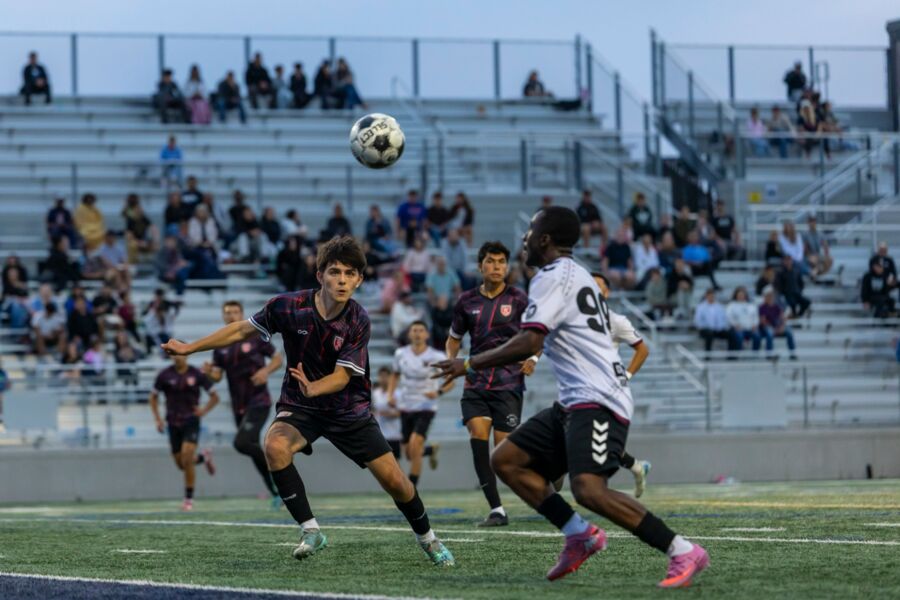
From a distance sport looks like the ideal job for automated selection: thousands of frames, endless bursts, faces everywhere. Up close it is the genre these tools were least designed for, because the thing that decides a sports frame is a hundredth of a second, not a face. Here is what they are genuinely good at on a game card, where they go wrong, and how to test one before it costs you a picture.
Read what these tools actually measure
The whole problem is visible in the feature lists, so start there. Adobe's Assisted Culling, in early access in Lightroom, scores subject focus, eye focus and eyes open, and sets aside exposure failures, misfires, documents and receipts. Adobe is candid about the fit. Its own guide says the current feature set "is optimized for portraits and headshots".
Imagen's culling lists face recognition to group subjects and duplicates, blur detection, and closed eye detection with an exception for kisses, since some closed eyes are keepers. Aftershoot describes scoring across sharpness, exposure, blinks, duplicates, facial expression and composition, and it does name sports among the genres it serves.
Now read that list as a sports photographer. Focus plane, eyes, expression, duplicates, exposure. Every one of those is a question about a face that is holding still. None of them is a question about where the ball is, which hundredth of a second the contact happened in, or which of the twenty two people on the field is the one somebody is paying for.
That is not a flaw and it is not a criticism of anyone's engineering. Weddings and portraits are where the volume of the market is, so that is what got trained, tested and tuned. It just means the fit with sport is partial, and knowing which part is the difference between a useful assistant and a lost frame.
The decisive variable in sport is time, and a score has no clock
Our guide to sports photo culling sets out what makes a keeper in each sport, so here is the short version: the frame that pays is contact or full extension, and the frames on either side of it are identical to anything measuring quality. Bat before ball and bat on ball score the same. One of them sells and the other is a practice swing.
That single fact is why a general quality ranking cannot finish this job. Three more places it points the wrong way:
- Intentional blur. A panned cyclist, a slow shutter on a swimmer's arm, wheel spin that says speed. Anything scoring overall sharpness reads craft as failure.
- Frames that are meant to be imperfect. Backlight through spray, heavy grain from a dark gym, a foreground player half blocking the subject. Editorially the best photograph on the card, technically a mess.
- Context that is not in the file. The software does not know the score. It does not know which player just came back from injury, that number 7 is the client's daughter, or that a routine goal in the twelfth minute turned out to be the winner. Those facts arrive after the shutter and they change what the frames are worth.
There is also the failure that looks like success. Autofocus locks cleanly onto a defender's shoulder while your subject sits soft behind it. Every sharpness measure loves that frame. It is unusable, and only a person looking at it knows why.
What it genuinely earns its place doing
None of that makes automated selection useless on a game card. It makes it a first pass rather than an editor, and on a sports folder the first pass is most of the volume.
- Burst grouping. Seeing fourteen frames of one tackle as a single block, instead of scattered through a timeline, is most of the work. The mechanics are in culling high frame rate bursts.
- Genuine focus misses. A machine finds the frames where focus went to the crowd faster than tired eyes at eleven at night, and it is no worse in the third game of the day than it was in the first.
- The portrait shaped parts of the card. Warmups, team lines, program headshots, podium and trophy frames, the celebration where everybody is facing you. This is exactly the material the tools were built for, and they are good at it.
- The long stretches where nothing happens. Midfield play, the pitcher between deliveries, the third identical drill. Files you have to look at and will never deliver.
Think of it as sorting rather than judging. The honest question is not whether the tool likes a photograph. It is whether the candidates arrive in front of you fast enough that the night is shorter after you have reviewed its choices, which is the framing in when AI culling actually saves time.
The number that matters is the keeper it did not show you
Every selection tool makes two kinds of mistake and they do not cost the same. Passing a mediocre frame through to you costs three seconds. Ranking the winning goal low, because the ball sits over a face, the athlete is backlit and half the frame is a defender's shoulder, can cost you the picture of the season, and you will never know it happened. That asymmetry is the argument in false negatives in AI culling, and sport is where it bites hardest, because the decisive frame is the one most likely to look technically odd.
Two habits follow from it. Treat a low score as a sorting order and not a verdict, so a quiet ranking never becomes a decision you did not make. And keep every original until the gallery is delivered and the season is over. Our piece on keeping rejected raw files makes the general case. Sport has a specific version: the frame you skipped at eight in the evening is the one a parent asks for on Friday, and a parent asking is a sale.
This is also the question to ask a vendor before anything else. What happens to the files the tool does not pick? Some move them into a rejects folder. Some only mark them. The difference does not matter much until the night it does.
How to test one before you trust it on a paid game
Do not evaluate a tool on a bright Saturday with a small card. Test it where it will be asked to work: a daytime field sport, a high ISO indoor gym, and a tournament with a full roster and several games in one folder. Run your usual method as the control on at least one of them, so you have something to compare against rather than an impression.
Then measure four things. Three of them are about time. The fourth is the one that can fail the tool on its own.
| What to measure | How | What a pass looks like |
|---|---|---|
| Obvious misses caught | Count the frames it deprioritized that you agree with | The great majority, or it has not saved you a pass |
| Keepers in its shortlist | Select the gallery your own way, then check how many finalists were in its picks | Nearly all of them |
| Time spent correcting it | Time yourself fixing its groups and overriding its scores | Less than the time the first pass saved |
| Decisive frames it buried | Audit its low ranked files inside your key bursts, one by one | Zero |
The fourth row is the test. Thirty minutes saved is not a win if it hid one goal, and you only find that out by looking at what it set aside rather than at what it offered.
Start conservative. Set the thresholds so more candidates come through than you need, because it is far cheaper to skim extra frames than to hunt for a missing one under deadline. Tighten as you learn how it behaves with your bodies, your frame rate and your sport. Widen its mandate only when that fourth row keeps coming back zero.
A division of labor that survives a deadline
Once you know what the tool sees, the workflow writes itself. The order matters more than the software.
- Ingest and back up before any selection decision. Two copies, verified, cards still full. The full clock by clock version is our same day sports gallery pipeline.
- Feed it clean input. One game per folder, one lighting condition per pool. Four matches mixed together give any grouping model nonsense to work with, and they wreck your batch corrections too.
- Let it group the bursts and flag the focus misses. This is the part it does better than you at midnight.
- Review every decisive burst yourself. Goals, catches, tackles, finish lines, celebrations, and anything you remember happening. No exceptions, whatever the scores say.
- Check coverage last. By team, athlete and period. No tool knows which athletes the club expects to see, and a gallery that misses six children on the roster produces the only feedback you will get.
Notice that the human work is concentrated where judgment is densest, and the machine work is spread across the volume. That is the trade that actually pays. It is also the reason a tool that fits weddings can still fit a game card: you are not asking it to be a sports editor, you are asking it to sort the material so the sports editor, who is you, spends the evening on forty bursts instead of three thousand files. The deadline side of that is covered in culling sports and event photos.
What a sports aware tool would have to understand
It is worth naming what is missing, because it tells you what to ask for as these products develop. A tool built for sport rather than adapted to it would need to score things nobody currently scores: the position of the ball relative to the body, the instant of contact inside a sequence rather than the quality of a single frame, jersey numbers as identity so coverage can be counted, and the difference between motion blur that was chosen and motion blur that was an accident.
None of that is science fiction, and some of it is easier than the face work already shipping. It is just not where the demand has been. Until it arrives, the split stands: machines are good at the repeated and the measurable, people are good at the moment and the meaning.
Where Kepla fits, stated plainly
Kepla clears the obvious misses and hands you the clean frames. It never deletes, moves or renames a file, so every frame it did not pick stays exactly where it is and is one tap away. In sport that promise is the whole point, because the frame a model ranks low is sometimes the frame of the season. We are building phone first, a first pass on an iPhone or iPad on the drive home, then the same shoot open on the Mac at full size for the bursts that deserve real attention. Being straight about status: the picking app for iPhone, iPad and Mac is still being built. What is live today is our free booking page, which holds dates and takes deposits while we build the rest.
FAQ
Does AI culling work for sports photography?
Partly, and it depends what you ask of it. It is reliable at grouping bursts, catching real focus misses, and handling the portrait shaped parts of a game card such as warmups, team lines and podium frames. It is not reliable at picking which frame inside a burst is the moment, because that depends on ball position, timing and who the athlete is. Use it to sort, not to decide.
Why do AI culling tools struggle with action shots?
Because they score qualities that hold still: focus, eyes open, expression, exposure, duplicates. In sport the decisive difference between two frames is a hundredth of a second, and both frames score the same. Intentional motion blur, heavy backlight and a partly obscured subject all read as technical faults when they are often the reason the picture works.
Can Lightroom Assisted Culling handle a game?
It can help with part of one. Adobe's early access feature scores subject focus, eye focus and eyes open and sets aside misfires and exposure failures, and Adobe states the current feature set is optimized for portraits and headshots. That makes it useful on warmups, team lines and celebrations, and a sorting order rather than an answer on peak action.
Will AI culling delete my rejected sports photos?
It depends entirely on the tool, so check before you run one on a card you cannot reshoot. Some move unpicked files into a rejects folder, some only mark them. Kepla only marks its picks and never deletes, moves or renames anything, which matters in sport because a frame nobody wanted on Saturday is often the frame a parent asks for on Friday.
How do I test AI culling before using it on a paid game?
Run it on three contrasting jobs: a daytime field sport, a high ISO indoor gym, and a busy tournament. Keep your usual method as a control. Then count four things: how many obvious misses it caught, how many of your final keepers were in its picks, how long you spent correcting it, and whether it buried any decisive frame. The last number should be zero.
The frame of the season should never be one tap from lost.
Kepla for Mac clears the obvious misses from a card, names the reason on every frame it sets aside, and leaves the choosing to you. Nothing is ever deleted, moved or renamed. Free through the private preview · the first hundred photographers keep it at $99 a year.